



Written by Justin Mewse
October 2026
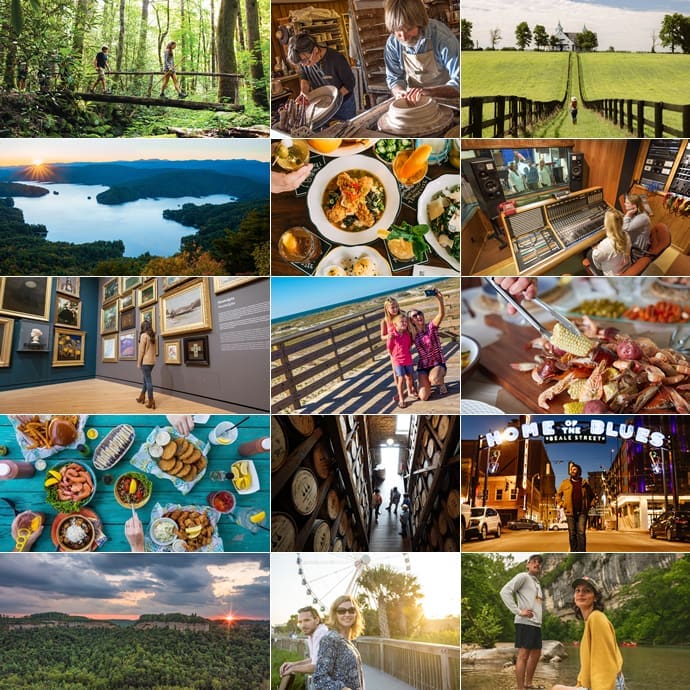
The American South’s people, places and traditions give depth to its familiar attractions. Across Alabama, Arkansas, Kentucky, South Carolina and Tennessee, recording studios, regional food and local heritage offer ways to shape a holiday around individual interests. From an Ozark gathering to a Lowcountry kitchen, these encounters reveal the stories behind the icons and add variety to itineraries combining culture, history and the outdoors.
Use the links below to explore each state, or read on for a closer look at the people, places and traditions waiting to become part of your clients’ next holiday:
Alabama: The People and Places That Leave Their Mark | Arkansas: A Place for Curiosity and Individual Interests | Kentucky: A Closer Look at What Makes It Remarkable | South Carolina: Connections Between People and Place | Tennessee: Stories That Give a Stay Greater Depth
Alabama: The People and Places That Leave Their Mark
Alabama’s appeal becomes clearer through the details: the neighbours who sustained a protest, the musicians accompanying a famous voice, the recipe that became a local institution. Across its historic cities, northern uplands and Gulf shoreline, these stories give familiar sights greater meaning. For agents introducing the state to clients, they provide useful starting points for a holiday shaped by personal interests, with opportunities to connect with the lives and traditions behind its landmarks.
The Collective Courage Behind Civil Rights
At Alabama’s Civil Rights landmarks, famous names introduce a much wider story of community determination. When Rosa Parks was arrested in Montgomery in December 1955, the response depended on extraordinary organisation. Campaigners distributed leaflets, churches hosted meetings and volunteer drivers helped people reach work through an extensive carpool network. Others walked miles each day. This context gives a visit to the Rosa Parks Museum a deeper resonance: the boycott’s strength came from thousands of people repeatedly choosing to participate.
In Birmingham and Selma, streets, churches and public spaces place the movement within everyday life. Museum visits combined with time at the locations themselves help clients understand the decisions people faced and the risks they took. At the Edmund Pettus Bridge, the voting-rights campaign becomes connected to a physical place. An itinerary with an unhurried pace allows space between stops to absorb individual testimonies and reflect on how organised communities helped bring about national change.
Explore Alabama’s Historic Sites ↗
From Canyon Rims to Coastal Habitats
A journey from northern Alabama towards the Gulf brings a gradual change in scenery and outdoor experiences. Around Little River Canyon, viewpoints reveal the scale of the gorge, while woodland walks offer a closer perspective beneath the canopy. Time at a few carefully chosen stops allows visitors to appreciate the river and surrounding terrain without a packed sightseeing schedule. Elsewhere in the uplands, Cheaha State Park offers broad views across the southern Appalachians, introducing a mountainous side of Alabama that clients may not expect.
On the coast, the focus shifts to the habitats behind the beaches. The Hugh S. Branyon Backcountry Trail links walking and cycling routes through Gulf State Park’s varied environments. Along Gulf Oak Ridge, live oaks draped in Spanish moss create a different setting from the open shoreline, while the lakes offer opportunities for wildlife watching. For clients combining a self-drive with a coastal stay, these experiences add variety to the itinerary and give the beach element an appeal beyond time on the sand.
Find Your Alabama Outdoor Escape ↗
The Musicians Behind the Voice
Recordings made in The Shoals owe much of their identity to the musicians accompanying the lead singer. The rhythm, instrumental phrases and space around the vocal help explain why this part of Alabama attracted such remarkable talent. At FAME Recording Studios, Aretha Franklin’s 1967 session brought her together with musicians whose contributions helped shape a turning point in her career. Keyboard player Spooner Oldham supplied the distinctive electric-piano figure that helped the recording take shape. That collaborative story gives visitors a connection to the studio through music they may already know.
Nearby in Sheffield, Muscle Shoals Sound Studio adds the story of musicians taking control of their working lives. In 1969, David Hood, Jimmy Johnson, Roger Hawkins and Barry Beckett established their own studio at 3614 Jackson Highway. Known as the Swampers, they became business partners as well as performers, handling bookings and bills alongside recording sessions. Including both studios gives music-focused clients complementary perspectives on the same creative community. Familiarity with selected recordings can enrich the visits, revealing contributions that are easily overlooked when listening to a favourite song.
Explore Alabama’s Music Landmarks ↗
A Local Recipe, a Wider Food Story
Alabama’s food traditions offer accessible ways for clients to connect with local life. In Decatur, Big Bob Gibson Bar-B-Q traces its beginnings to a railroad worker cooking in a hand-dug pit at weekends. Founded in 1925, the restaurant became closely associated with Alabama white sauce, a tangy, mayonnaise-based accompaniment particularly linked with barbecue chicken. This regional speciality illustrates the individuality of Southern barbecue, with the meat, smoke and sauce each contributing to a style that may surprise visitors familiar with other versions.
Farther south, Gulf seafood takes a more prominent place on the menu. Around Mobile, restaurants offer opportunities to compare oysters, shrimp and gumbo, from simple preparations to dishes with layers of seasoning. Conversations about the day’s catch and its origins can add a local perspective to the meal. An itinerary featuring both longstanding restaurants and contemporary kitchens gives food-interested clients a broader view of Alabama’s dining culture, showing how established traditions continue to be maintained, adapted and enjoyed.

Arkansas: A Place for Curiosity and Individual Interests
A river outing shaped by recent rainfall, a bathhouse with its own rituals, a handmade object bought from its maker: Arkansas rewards an interest in how things work and where they come from. Outdoor activities, bathing traditions, cultural attractions and local hospitality offer different ways to connect with the state. These experiences can shape a holiday around individual interests, with room for both active days and time spent within its communities.
Building Confidence on the River and Trail
On the Buffalo National River, the choice of paddling route plays an important part in the experience. This free-flowing river depends heavily on rainfall, so a stretch suited to a spring outing may differ from one recommended later in the year. The upper river often draws paddlers earlier in the season, while opportunities tend to move downstream as water levels fall. Local outfitters can advise on routes according to current conditions, experience and the time available. A suitable stretch allows visitors to appreciate the limestone bluffs and wooded banks at a comfortable pace.
A similar approach applies to the mountain-bike trails around Bentonville. The wider OZ Trails network offers opportunities to develop confidence gradually, with routes suited to different abilities alongside more demanding terrain. Bike hire and local guidance can make an unfamiliar trail system more approachable. For holidays that include paddling or cycling, matching activities to visitors’ interests and experience helps create an enjoyable introduction, with time to appreciate the surroundings as well as the activity itself.
Find Your Arkansas Adventure ↗
The Ritual of Taking the Waters
In Hot Springs, the history of bathing adds context to the experience available today. The Fordyce Bathhouse, now the national park’s visitor centre and museum, reveals how elaborate the tradition once became. Marble, stained glass, dressing rooms and a gymnasium reflect an era when visitors travelled here for extended bathing programmes. A visit helps explain why an entire resort town developed around the springs, with architecture and daily routines shaped by the water.
Along Bathhouse Row, two operating bathhouses offer different ways to experience that tradition. The Buckstaff, which opened in 1912, maintains a traditional bathing approach, while the Quapaw offers communal thermal pools alongside contemporary spa services. The spring water is piped into the buildings, making this an indoor bathing experience. These contrasting settings allow visitors to choose according to their preferences. Time along the Grand Promenade, among the surrounding trees or over an unhurried dinner can extend the relaxed pace beyond the bathhouse, making Hot Springs a restorative stop within a wider itinerary.
Find Your Arkansas Wellness Escape ↗
How Places Tell Their Stories
At Crystal Bridges Museum of American Art in Bentonville, the building influences how visitors encounter the collection. Architect Moshe Safdie arranged pavilions and bridges around spring-fed ponds within a wooded ravine, keeping the outdoors in view throughout the museum. Transitions between galleries, water and trees make the setting part of the experience, with space between works that present different perspectives on American life. This relationship between art, architecture and nature gives the museum an appeal extending beyond the collection alone.
Across the state in the Delta, Historic Dyess Colony tells its story through a very different kind of building. The restored Johnny Cash Boyhood Home belongs to the history of a federal agricultural resettlement community established in 1934. The Cash family arrived the following year, joining other Arkansas families seeking a fresh start through farming. Visiting the colony exhibits alongside the house places a famous childhood within the wider circumstances of rural life during the Depression. Domestic rooms and agricultural history help explain how a place could influence an artist long after he left it, adding depth to a music-focused itinerary.
Explore Arkansas’ Art and Heritage ↗
Shared Music and Local Connections in the Ozarks
In Mountain View, an evening’s entertainment can grow out of musicians gathering around the courthouse square. When players assemble, listeners become part of an informal occasion built around shared enjoyment. An overnight stay with some flexibility in the evening offers opportunities to encounter these gatherings when they take place. They provide a personal introduction to a town where traditional music remains part of community life, with the atmosphere shaped by those playing and listening.
That spirit of sharing extends to the Ozark Folk Center State Park, where the seasonal Craft Village brings visitors into contact with working makers. Pottery and weaving demonstrations open up conversations about materials, techniques and the time involved in producing an individual piece. Buying directly from an artisan gives a souvenir a connection to its maker and the visit itself. With Southern cooking at the Skillet Restaurant and cabins at Dry Creek, there is also the option to stay close to the activity. Meals, demonstrations and performances can then form part of a relaxed Ozark stay, with opportunities for personal encounters throughout.

Kentucky: A Closer Look at What Makes It Remarkable
Kentucky’s best-known sights offer opportunities to explore the processes, skills and personal stories behind them. Underground passages reveal the effects of water over millions of years, distilleries explain the decisions behind a bourbon’s flavour, and horse farms introduce the care involved in raising thoroughbreds. Guides, makers and museums make these subjects accessible to newcomers and enthusiasts alike. Alongside these experiences, individual lives provide a deeper understanding of Kentucky and its contribution to America’s story.
The Clues in Rock and Water
A visit to Mammoth Cave introduces a landscape formed by water working on limestone over immense stretches of time. The rock itself began as sediment beneath a shallow sea, long before underground passages existed. Layers of sandstone and shale above helped protect the developing cave system. This background gives the chambers greater meaning: changes in height, exposed layers and the shapes of passages reveal the forces that created them. Guided tours provide an introduction to these features, while the park’s surface trails offer a further perspective on the surrounding terrain.
Elsewhere, Red River Gorge brings Kentucky’s rock formations into the daylight, with sandstone cliffs and arches rising among the trees. Walking routes reveal these features from changing viewpoints, offering a different sense of scale from the underground passages. Pairing the gorge with Mammoth Cave gives an outdoor itinerary a connection between two contrasting settings. Together, they offer scope for geological interest and scenic exploration, with the choice of tours and trails helping to shape the experience around visitors’ abilities and interests.
Explore Kentucky’s Natural Wonders ↗
What Goes Into the Glass
A bourbon tasting gains depth through an understanding of the decisions behind the flavour. The grain recipe, known as the mash bill, provides a starting point. At Maker’s Mark in Loretto, soft red winter wheat takes the place of rye, contributing to the style the distillery aims to produce. Fermentation and distillation develop that foundation before the spirit enters oak barrels, where wood and time play their part. Visitors can also dip their own bottle into the distillery’s signature red wax, adding a hands-on element and a personal finishing touch to a souvenir of Kentucky’s bourbon country.
The warehouse adds another layer to the story. Maker’s Mark rotates its barrels between positions to balance their exposure to different temperatures, illustrating how closely maturation is managed. Across the Kentucky Bourbon Trail®, visits offer opportunities to compare how producers choose their grains, prepare their barrels and decide when a whiskey is ready. These differences give tastings an interest beyond specialist knowledge, allowing visitors to identify the aromas and flavours they enjoy. A selection of complementary distillery experiences can therefore provide variety within a bourbon-focused itinerary.
Find Your Kentucky Bourbon Experience ↗
The Working Life Behind Race Day
Long before a thoroughbred reaches the starting gate, its life is shaped by daily care and patient preparation. Around Lexington, nursery-farm visits introduce that less visible side of Kentucky’s horse industry. Depending on the season, visitors may encounter mares with foals, weanlings or yearlings, learning how their needs change as they grow. Tours available through Horse Country explain breeding and development, revealing the working routines behind the white-fenced paddocks associated with the region.
Visits can be selected around an interest in young horses, breeding stallions or the care of retired thoroughbreds. Each reveals a different stage of an animal’s life, with guides explaining the routines and responsibilities involved. This understanding adds context to Churchill Downs and the Kentucky Derby Museum, connecting the spectacle of racing with the years of preparation behind it. The horses on the track represent the work of many people whose names rarely appear in the headlines. That relationship between farms, carers and competition gives horse country an appeal extending well beyond those who already follow racing.
Get Closer to Kentucky’s Horse Country ↗
Achievement, Conviction and the Lives We Remember
At Louisville’s Muhammad Ali Center, sporting achievement opens a conversation about how a person chooses to live. The museum frames Ali’s story through six principles, including confidence, conviction, dedication and giving. This approach explores his influence beyond boxing: how he used his voice, what he stood for and why his example continues to matter. The combination of sporting history and wider social themes gives the centre relevance within a range of cultural itineraries, including for visitors with little previous interest in boxing.
At Mammoth Cave, the life of Stephen Bishop adds another perspective on Kentucky’s history. Bishop began guiding there in 1838 while enslaved, exploring passages and developing an extraordinary knowledge of the cave. In 1842, he drew a map of its explored passages from memory. His achievements helped expand understanding of a place now recognised around the world, despite the restrictions imposed upon his own life. His story adds a human dimension to the underground visit, connecting exploration with the circumstances of the people involved. The Old Guide’s Cemetery, reached from the Heritage Trail near the visitor centre, provides a place to acknowledge his contribution.

South Carolina: Connections Between People and Place
South Carolina’s history, food and natural environments offer complementary perspectives on the state. A waterfront memorial gives context to a harbour; a rice dish carries knowledge passed through generations; a forest responds to the rise and fall of its rivers. Alongside these connections, seaside communities provide distinct settings for a coastal stay. Cultural visits, local dining and outdoor excursions can be combined with time beside the Atlantic, creating varied itineraries around individual interests.
Where Memory Meets Living Culture
At Charleston’s International African American Museum, the setting carries meaning beyond the galleries. The building stands above Gadsden’s Wharf, where enslaved Africans were brought ashore, leaving space beneath it for the African Ancestors Memorial Garden. Designed by Walter Hood, the garden uses planting, water and sculpture to honour those lives. Time here places the harbour within a history that its present-day appearance cannot convey on its own, making the grounds an integral part of the museum visit.
On St. Helena Island, Penn Center offers another perspective through education and community life. Founded as Penn School in 1862 for formerly enslaved people, it became a place of learning, practical support and cultural preservation. Its continuing connection with Gullah Geechee heritage helps visitors understand a culture sustained by people who live in the region today. Interpretation, talks and locally led experiences provide opportunities to hear those perspectives. Together, these places bring remembrance and living heritage into a cultural itinerary, with communities’ own accounts central to the experience.
Explore South Carolina’s History and Heritage ↗
Different Ways to Experience a Coastal Stay
The choice of base on South Carolina’s coast influences the balance between beach time and other activities. Around Myrtle Beach, entertainment, restaurants and family attractions offer variety throughout the day and evening. This setting can accommodate different interests within the same holiday, combining time on the sand with afternoon outings and live shows. Proximity to those activities is a useful consideration when selecting accommodation, particularly for visitors who prefer to have plenty within easy reach.
On Hilton Head Island, cycling can become part of the daily routine, alongside beach visits, shaded paths and relaxed meals. Charleston and nearby Folly Beach, Isle of Palms or Sullivan’s Island offer options for combining city exploration with a coastal break. A seaside base with visits to Charleston creates a different holiday from a stay in the historic centre with beach excursions. The preferred setting for mornings and evenings, along with travel between locations, helps determine which arrangement is the better fit.
Find Your South Carolina Coastal Stay ↗
The Knowledge Carried in a Bowl of Rice
Rice offers a revealing introduction to South Carolina’s food culture. Enslaved West Africans brought expertise in its cultivation and preparation, and their knowledge and forced labour were central to the Lowcountry’s rice economy. Within Gullah Geechee communities, cooking traditions continued through family kitchens and shared meals. Dishes such as red rice, crab rice and Hoppin’ John, made with rice and field peas, connect familiar ingredients with that longer history.
Meals gain further context where cooks share their own connection to these dishes. Menu descriptions and conversations can explain why an ingredient matters, how recipes vary between families and what has changed over time. Perlou, a seasoned rice dish that can incorporate meat or seafood, provides another introduction to the resourcefulness and flavour of this cooking. Contemporary interpretations add interest when chefs acknowledge the traditions informing their work. A food-focused itinerary can follow these connections across several meals, giving visitors an understanding of both the cooking and the people who sustain it.
Taste South Carolina’s Culinary Traditions ↗
Environments Shaped by Water
At Congaree National Park, water shapes the forest even when it is out of sight. Periodic flooding is part of this environment’s rhythm, influencing both the habitat and the routes available to visitors. The boardwalk provides a perspective on changing ground levels and the relationship between towering trees and the forest floor. An unhurried visit allows time for wildlife observation and an appreciation of details beneath the canopy, adding interest beyond the walk itself.
Farther inland, Lake Jocassee offers another way to experience the outdoors through water. From Devils Fork State Park, boat excursions open up views of wooded shores and waterfalls that are best approached from the lake. Guided outings can provide context on the surroundings as well as access to these views. The two locations offer contrasting experiences, from the enclosed setting beneath a forest canopy to open water framed by mountain slopes. Current park conditions are an important planning consideration, particularly where flooding affects access, while a flexible schedule allows time for closer observation.

Tennessee: Stories That Give a Stay Greater Depth
An evening in Tennessee might bring a familiar song performed by its writer or an introduction to a longstanding family recipe. Elsewhere, handmade objects reveal the ingenuity of mountain communities, while forest trails and cypress-lined waters offer contrasting outdoor settings. Beyond the famous names, these details provide opportunities to build a holiday around individual interests, connecting city neighbourhoods with quieter parts of the state through music, history, food and nature.
Songs and the Settings That Bring Them to Life
In Nashville, a familiar song may be performed by the writer whose contribution is less widely recognised than the recording artist’s. At The Bluebird Cafe, the intimate listening-room setting puts words and melody at the centre of the evening. Its signature In the Round shows bring songwriters together in the middle of the room, taking turns to perform and share how their songs developed. Hearing the circumstances behind a lyric gives well-known recordings a more personal context, supported by the venue’s quiet-listening approach.
Other venues offer a different atmosphere and relationship between performers and audience. Around Beale Street in Memphis, live blues forms part of the street’s lively evening scene. In Nashville, the Grand Ole Opry brings the scale and shared excitement of an established stage show. A combination of these settings gives a music-focused itinerary variety, from an intimate encounter with songwriting to a club performance or larger production. Each offers a distinct perspective on Tennessee’s musical culture, with appeal for both dedicated enthusiasts and visitors with a more general interest.
Find Your Tennessee Live Music Experience ↗
From Mountain Forests to Cypress Waterways
The Great Smoky Mountains offer interest at more than one scale. Distant ridges provide broad views, while the damp forest floor supports a wealth of smaller wildlife. The national park is particularly renowned for its salamanders, with streams and moist woodland providing habitats for a remarkable variety of species. This ecological background adds depth to a woodland walk, giving shaded paths and mossy banks an interest beyond the scenery. Staying on marked trails and leaving rocks and logs undisturbed helps protect those habitats while allowing visitors to appreciate the setting.
Across the state, Reelfoot Lake presents an entirely different outdoor environment. Its shallow waters and flooded cypress trees create a low, open landscape characterised by shorelines, reflections and birdlife. Boat outings bring visitors closer to the water and the trees growing from it, offering a contrast to mountain viewpoints and forest walks. The two areas illustrate the breadth of Tennessee’s natural environments and can feature within a longer journey across the state. Their contrasting settings also provide options for holidays centred on walking, wildlife or scenic exploration.
Explore Tennessee’s Great Outdoors ↗
The Ways People Keep Their Stories Alive
At the Sequoyah Birthplace Museum in Vonore, written language provides the starting point for understanding an extraordinary achievement. Sequoyah developed a writing system for Cherokee in which characters represent syllables, giving speakers a way to record and share their language. Interpretation explores the persistence involved in its creation and the importance of language in cultural continuity. The museum places his work within Cherokee history, connecting an individual accomplishment with the wider community it served.
Near Clinton, the Museum of Appalachia preserves lives through the things people made and used. Its collections include woven baskets, quilts and handmade musical instruments, with personal stories attached to objects that might otherwise seem ordinary. A banjo fashioned from a hubcap is one particularly vivid example of resourcefulness. Accounts of lesser-known residents sit alongside those of more prominent figures, giving the collection a personal view of mountain life. Together, these visits explore how knowledge survives through writing, practical skills and possessions, adding complementary perspectives to a cultural itinerary through East Tennessee.
Get Closer to Tennessee’s History and Heritage ↗
Local Specialities and Individual Styles
Nashville hot chicken offers more variety than its reputation for heat might suggest. The dish’s identity is closely connected with Prince’s Hot Chicken, whose established version provides a starting point for understanding how other kitchens interpret it. Differences in seasoning, coating and preparation give each version its own character. At Bolton’s, a dry-rub approach offers a different texture, while hot fish extends the same appetite for spice to another local favourite. The choice of heat level allows visitors to select according to their preferences and appreciate the flavours as well as the intensity.
In Memphis, barbecue introduces another set of regional variations. Dry-rub ribs put the seasoning directly into focus, while sauced preparations offer a different balance of smoke, sweetness and tang. Sampling contrasting styles gives visitors a straightforward way to explore the city’s food traditions. The Tennessee Whiskey Trail adds a further dimension, with distillery visits introducing local production methods and individual house styles. Meals and tastings spread across an itinerary can bring variety to a food-and-drink holiday, with each stop contributing its own perspective on Tennessee’s flavours.